
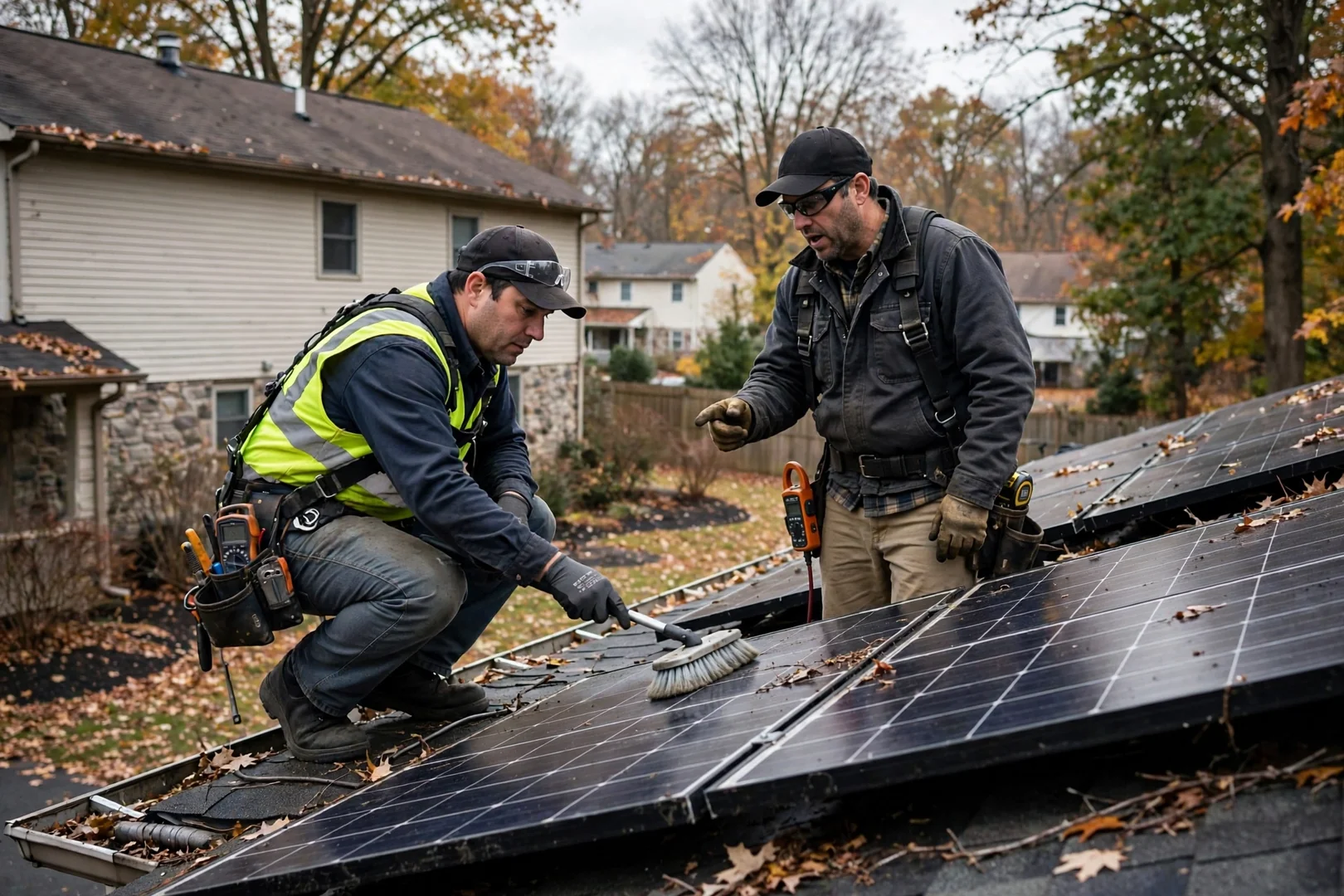
Scheduling should begin several weeks before your preferred installation window, because the sequence includes a site assessment, structural review of the roof deck and rafters, engineering drawings, permitting, and utility interconnection review. Roof-mount work in Wayne is also weather-dependent, so spring and early fall bookings tend to fill first as crews work around freeze cycles and wet decking. We confirm dates in writing once permit approval is in hand.
Residential Solar Installation in Wayne, NJ
Residential solar installation covers the design, permitting, and mounting of a rooftop or ground-level photovoltaic array on a single-family home, and it suits Wayne homeowners paying rising utility rates on older colonials, split-levels, and cape-style roofs across the township. Many local properties sit under mature oak and maple canopy, so shading analysis and string layout decisions matter as much as panel wattage. Our crews handle flashed rail mounting, roof penetration sealing, microinverter or string inverter wiring, and utility interconnection paperwork from start to inspection. Wayne Solar Panel Installations schedules 2026 site assessments year-round, with spring and early summer builds filling first since roof access is easiest before peak production season. Written estimates come standard.
Click Me to Call: (973) 922-9275Request Your Solar Estimate
Send your address and roof details for a written residential solar estimate.
Residential Solar Installation Overview
What Our Residential Solar Installation Service Includes
Residential solar installation is the process of engineering, permitting, mounting, and electrically connecting a photovoltaic system to a home’s service panel, and at Wayne Solar Panel Installations it includes shade modeling, structural review, racking installation, inverter commissioning, and utility interconnection across Wayne properties. Work begins with a roof condition and rafter-spacing survey, followed by an irradiance study that accounts for tree canopy and roof pitch before any module layout is finalized. Crews then set flashed L-feet into rafters, run rail, torque module clamps to manufacturer specification, and route DC conductors through conduit into a rapid-shutdown compliant combiner or microinverter trunk. Every system is meter-tested and commissioned before the post-job walkthrough.
Roof styles across the township vary widely, from steep asphalt-shingle colonials to low-slope additions and detached garages, so mounting hardware and attachment spacing are selected per structure rather than applied from a template. Freeze-thaw cycling, wet spring snow loads, and summer humidity all stress penetrations and conductor terminations, which is why sealing method and grounding continuity get particular attention here. Ground-mounted alternatives are specified when canopy cover or northern exposure limits rooftop yield, and our 2026 designs account for module degradation curves and future battery-ready wiring on both single-family and multi-unit residential buildings. Commercial rooftops follow a separate ballasted approach, but the same commissioning standards apply. Homeowners receive written estimates, production estimates, and documented interconnection filings.
Get a Written Estimate (973) 922-9275What Signs Mean Your Wayne Home Needs Residential Solar Installation?
Rising monthly kilowatt-hour charges, an aging electrical service panel, a recently replaced roof, and heavy summer air-conditioning load are the clearest signs a Wayne home is ready for a photovoltaic system. Utility bills that climb each summer while the house runs central air point to consumption a properly sized array can offset during peak irradiance hours. Homeowners with a 100-amp panel, undersized busbar, or no available breaker space often discover the limitation only during an interconnection review, which is why load calculations happen early. Fresh shingles change the math too. Installing modules on a roof with five or more years of remaining life avoids a costly removal and reset later.
Tree canopy is the other frequent obstacle, since mature oaks along older residential streets cast midday shade that drags down string voltage and creates production mismatch between rows. Systems installed without shade modeling underperform, and partial shading on a single string can reduce output well beyond the shaded modules themselves. Microinverters, module-level optimizers, or a ground-mounted array resolve this, depending on site geometry. Winter storm loading, ice damming near eaves, and spring pollen film also affect long-term yield and inform how we set attachment spacing and tilt. For 2026 projects, residential solar installation done with proper shade analysis, panel capacity verification, and documented commissioning addresses each of these conditions before they become production losses.
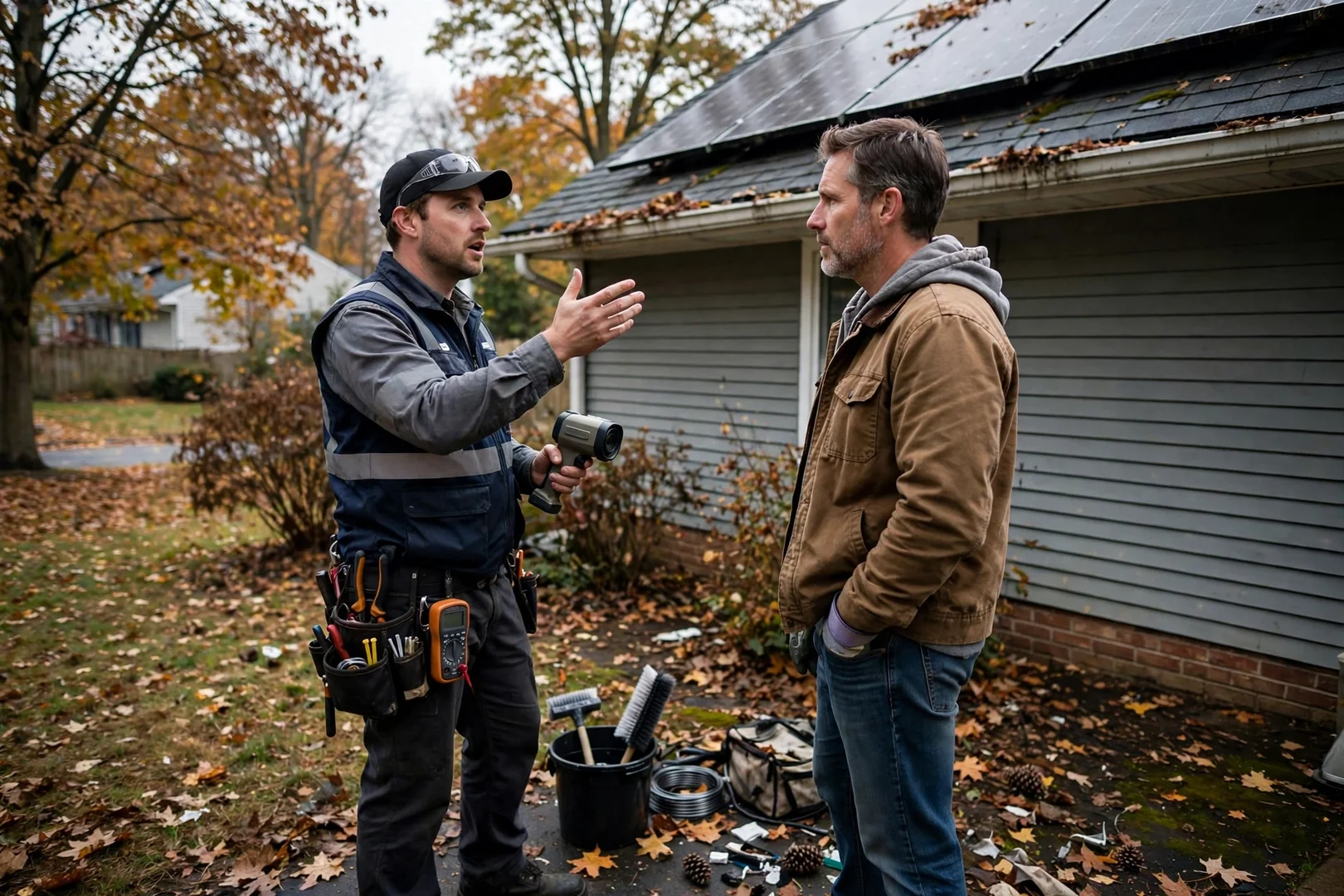
Residential Solar Installation FAQs for Wayne Homeowners
These answers address the questions Wayne homeowners raise most often about residential solar installation in 2026, from scheduling and site assessments to array layout, interconnection paperwork, and seasonal performance on local rooflines.
A residential installation covers the full system: module layout and racking, flashed roof attachments, DC wiring and conduit runs, string or microinverter configuration, rapid shutdown devices, a production monitoring setup, and the AC connection at your main service panel. We also handle permit submission, inspection coordination, and the utility interconnection application. A post-job walkthrough closes out the project so you understand monitoring and shutdown procedures.
Preparation is minimal, though clear driveway access for the equipment truck and unobstructed attic access for rafter verification help the crew stay on schedule. Homeowners should move vehicles away from the roof edge, secure pets indoors, and note the location of the electrical panel and any subpanels. Expect a short planned power interruption while the AC disconnect and breaker tie-in are completed.
Pricing differs because each roof presents its own conditions: pitch, rafter spacing, sheathing condition, number of planes, shading from mature oaks and maples, and the capacity of the existing service panel. Many older Wayne homes need a panel upgrade or line-side tap before an array can be interconnected, which changes the scope. Every quote is issued as a written estimate after an on-site assessment rather than an over-the-phone figure.
Local conditions shape both the mounting design and expected production, so arrays here are engineered for snow load, wind uplift, and the freeze-thaw cycles that stress poorly flashed penetrations. Winter snow cover briefly reduces output, while cold, clear days often improve module efficiency; summer humidity and pollen call for periodic cleaning and inspection. Tilt, row spacing, and attachment spacing are set with those seasonal patterns in mind.
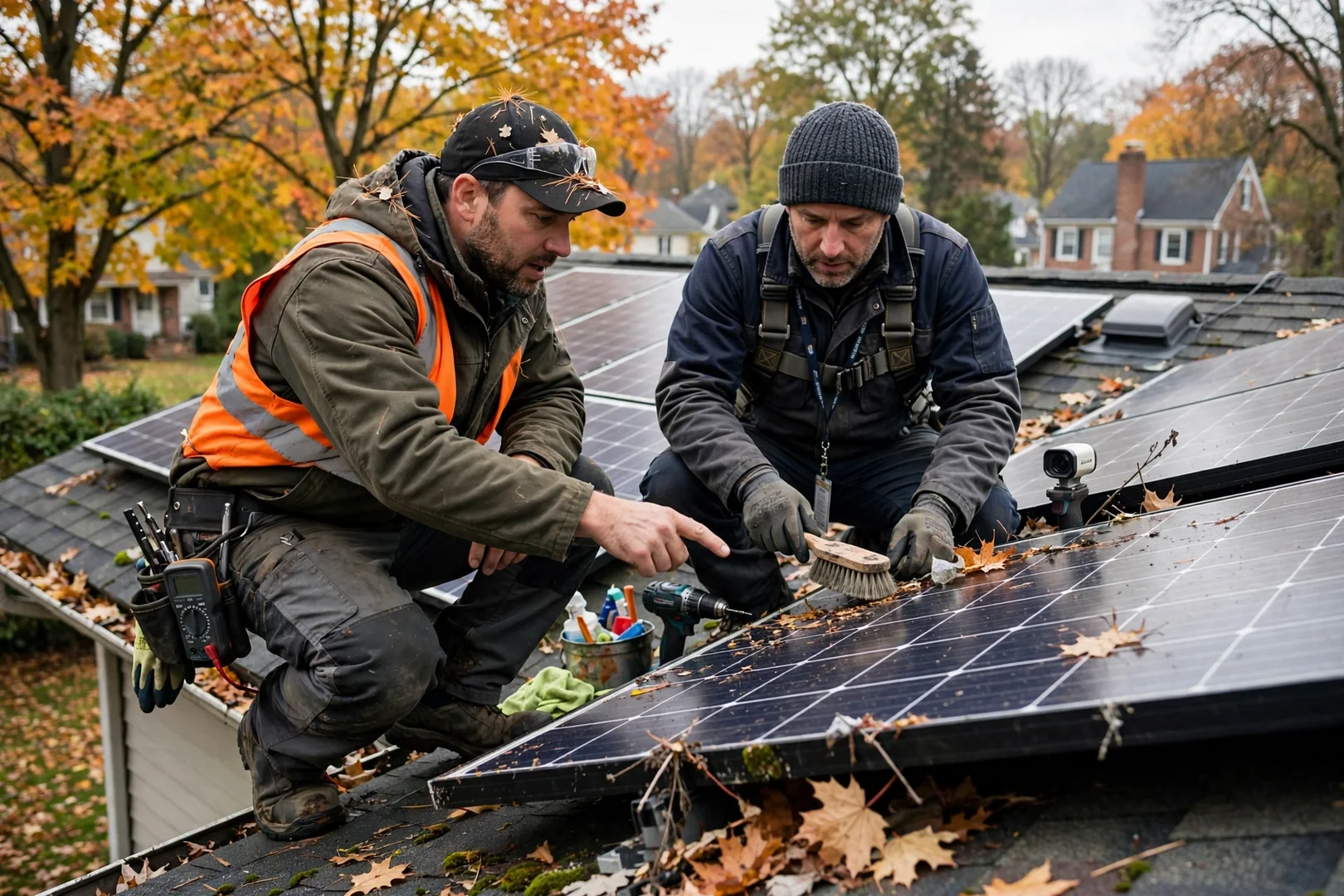
How Much Does Residential Solar Installation Cost in Wayne?
Residential solar installation pricing in Wayne depends primarily on system size in kilowatts, module and inverter selection, roof complexity, and the condition of your existing electrical service, with most 2026 projects landing inside typical ranges for northern New Jersey homes. System size follows your annual kilowatt-hour usage and available unshaded roof area, so a larger array with more modules and racking naturally carries more material and labor cost. Inverter architecture matters too: microinverters or DC optimizers cost more than a single string inverter but handle partial shading from mature trees far better.
Roof factors drive the rest. Steep pitches, multiple planes, slate or tile surfaces, and older sheathing all add labor, flashing, and safety staging time. Service panel capacity is the other common variable, since a 100-amp panel often requires an upgrade or line-side tap before interconnection is approved. Exact figures require an on-site assessment of rafter spacing, shading, and panel condition, which is why we provide free written estimates that itemize equipment, labor, permitting, and interconnection work before any commitment.
How Does Our Residential Solar Installation Process Work?
01
Site Assessment and Energy Review
Work begins with a physical inspection of the roof planes, rafter spacing, sheathing condition, and main service panel, paired with a review of twelve months of kilowatt-hour usage. Shading from surrounding oaks and neighboring rooflines is measured so array placement reflects real annual sun exposure.
02
System Design and Written Estimate
Engineering drawings define module layout, racking pattern, attachment spacing, conduit routing, and inverter architecture. You receive a written estimate itemizing equipment, labor, permitting, and interconnection scope before anything is ordered.
03
Permitting and Utility Interconnection
Our team submits structural and electrical plan sets to the local building department and files the utility interconnection application. Approvals are tracked in sequence, and installation dates are confirmed only after permits are issued.
04
Installation and Electrical Tie-In
Crews set flashed roof attachments into rafters, assemble the racking rails, mount and bond the modules, then run DC conduit to the inverter and rapid shutdown equipment. The AC connection at the service panel is completed last, with torque values and grounding verified throughout.
05
Inspection, Commissioning, and Walkthrough
After municipal inspection and utility permission to operate, the system is commissioned and production is confirmed against design targets. A post-job walkthrough covers monitoring access, rapid shutdown location, and seasonal maintenance expectations.
Why Do Wayne Homeowners Trust Us for Residential Solar Installation?
Call Us: (973) 922-9275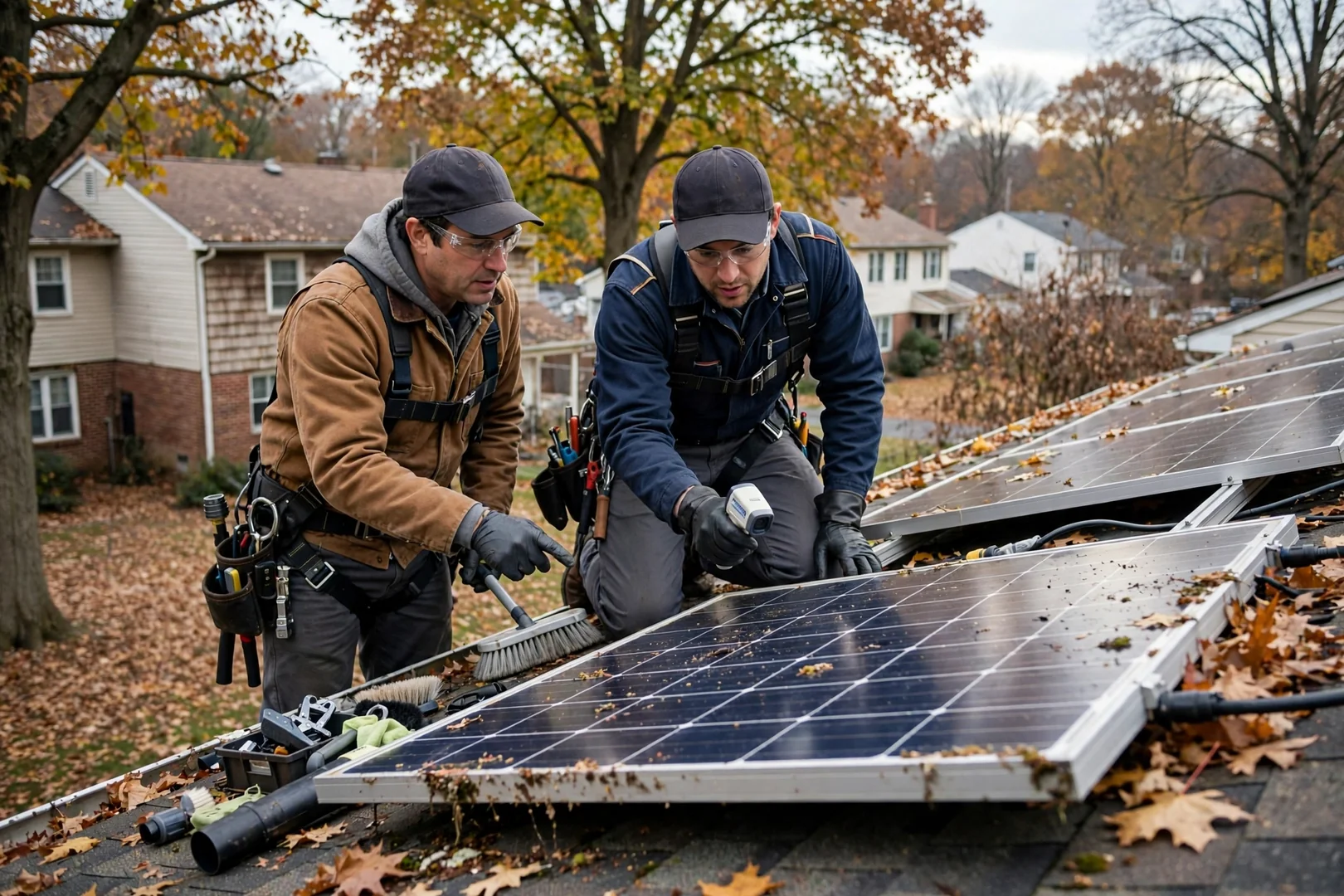
Focused Residential Solar Installation Advice. We match recommendations to your actual property conditions instead of using a one-size-fits-all package.
Clear Communication. You know what is being installed, why it matters, and how to maintain it after the visit.
Local Follow-Through. Our team supports homeowners and businesses in Wayne, NJ before, during, and after the job.
Free Residential Solar Estimates
Schedule Residential Solar Installation in Wayne
Planning a rooftop array for the 2026 season starts with an on-site evaluation of your roof structure, shading patterns, and existing electrical service panel. Our technicians document rafter spacing, azimuth, and tilt, then provide a free written estimate that outlines module layout, inverter selection, and permitting steps for your township. There is no obligation to proceed. Because Wayne properties range from older colonials with aging sheathing to newer builds with open southern exposure, each proposal reflects the conditions measured at your address rather than a generic template. Call or email to reserve an assessment window and begin the interconnection process this year.
Request Your Free Estimate (973) 922-9275