
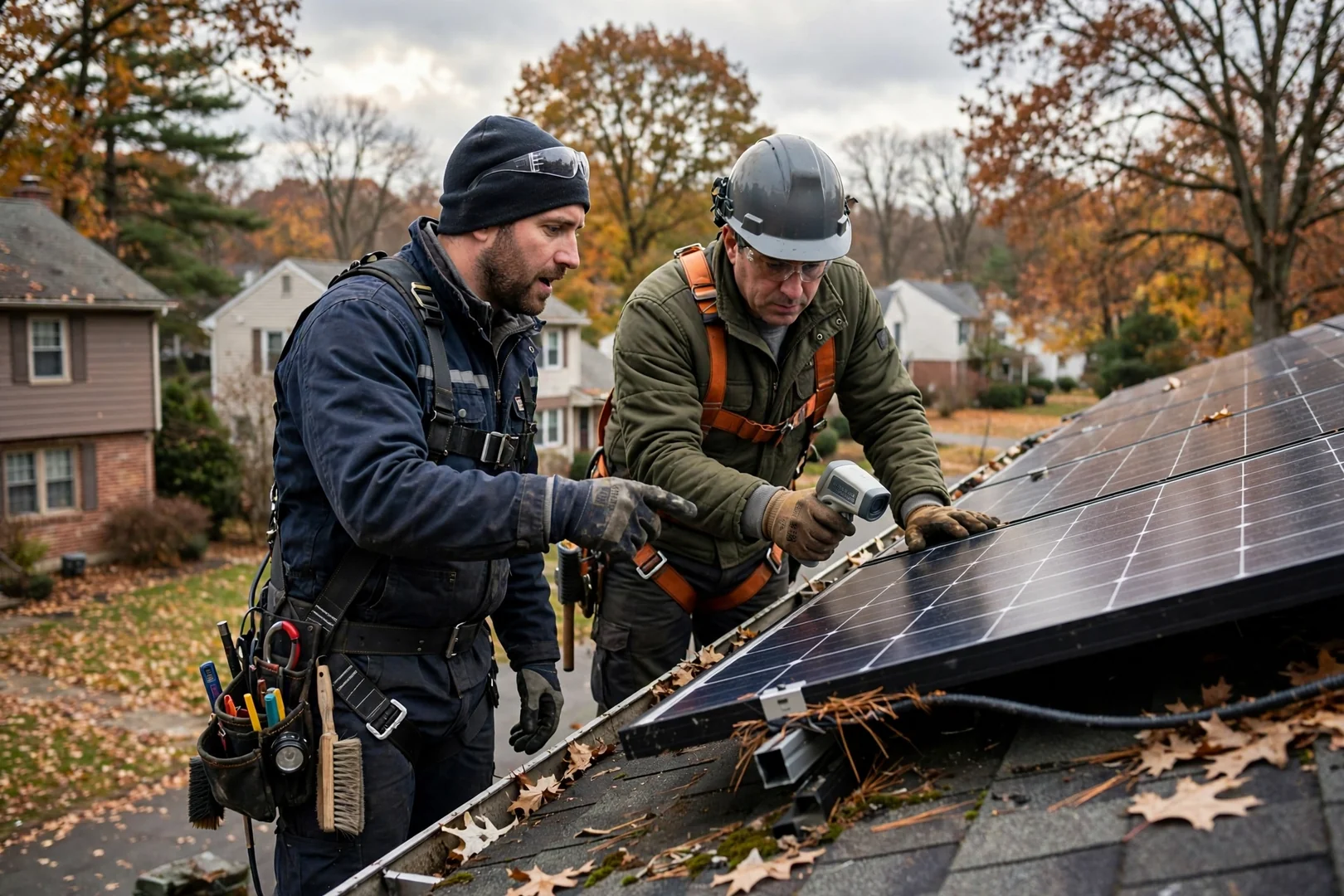
Scheduling for an off-grid installation begins with a load analysis and site survey, and the installation date is set once battery bank sizing, charge controller selection, and permitting documents are finalized. Because off-grid builds require electrical inspection and equipment lead times, we confirm a firm date in writing rather than holding a tentative slot. Autumn and early winter bookings in Wayne tend to fill faster, since owners want storage capacity in place before shorter daylight hours arrive.
Off-Grid Solar Systems in Wayne, NJ
Off-grid solar systems supply electricity independently of the utility grid, using a solar array, charge controller, and battery bank sized to carry a property through low-production days. Property owners around Wayne with detached barns, well pumps, wooded back lots, or cabins on parcels where a service drop would be costly are the most common candidates, particularly where mature tree canopy and Passaic River basin terrain complicate trenching. Load calculations come first. Our installation teams handle DC coupling, battery enclosure placement, generator integration, and grounding to code, and 2026 scheduling opens with spring site assessments so systems are commissioned before summer demand and winter irradiance losses set in.
Click Me to Call: (973) 922-9275Request Your Estimate
Share a few details about your property and a technician will follow up with next steps.
Off-Grid Solar Service Overview
What Our Off-Grid Solar Systems Service Includes
Off-grid solar is the design and installation of a self-contained power system that operates without a utility connection, and at Wayne Solar Panel Installations it includes load auditing, array sizing, battery bank configuration, charge controller selection, and inverter commissioning across Wayne properties. Work begins with a metered load audit and shading study, since northern New Jersey tree cover and winter sun angles reduce usable irradiance for several months each year. From there technicians specify MPPT charge controllers, lithium iron phosphate or sealed lead-acid storage, and a low-frequency inverter capable of handling well pump and compressor surge loads. Conduit runs, ground-mount racking depth, and frost-line footing decisions are set by soil conditions on the specific parcel.
Residential outbuildings, single-family homes on wooded acreage, small commercial shops, and multi-unit properties with detached utility structures each carry different load profiles, and system architecture is adjusted accordingly. Our 2026 approach places added weight on battery thermal management, because unheated garages and crawl spaces in this area swing widely between January cold and August humidity. Autumn leaf drop and ice loading also shape our recommended array tilt and inspection intervals. Every project closes with a written estimate honored through installation, a labeled system diagram, and a post-job walkthrough covering battery monitoring and generator transfer operation.
Schedule a Consultation (973) 922-9275What Signs Mean Your Property Needs Off-Grid Solar Systems?
Properties need an off-grid solar system when utility service is unavailable, prohibitively expensive to extend, or too unstable to support essential loads on a remote structure. Owners of wooded parcels in Wayne routinely discover that a new service drop requires hundreds of feet of trenching through rocky glacial soil and protected root zones, at a cost that exceeds a complete solar array and battery bank. Others rely on gasoline generators that run for days after storm-related outages, with fuel logistics, noise, and carbon monoxide exposure becoming ongoing problems. Detached barns and workshops often show voltage drop on long undersized feeders, causing dimming lights and hard starts on well pumps and compressors.
Failing standalone setups present their own symptoms: batteries that reach cutoff voltage by early evening, sulfated lead-acid cells losing usable capacity, charge controllers cycling into fault, and undersized inverters clipping surge loads. Winter is when these weaknesses surface. Shorter daylight, snow accumulation on low-tilt panels, and cold-temperature capacity loss compound quickly through the season, and demand for corrective work rises sharply each January into 2026. A properly engineered off-grid solar system resolves these conditions by matching daily generation to measured consumption, adding autonomy days for extended overcast periods, and integrating automatic generator start as a controlled backup rather than a primary source.
Off-Grid Solar Systems FAQs for Wayne Homeowners
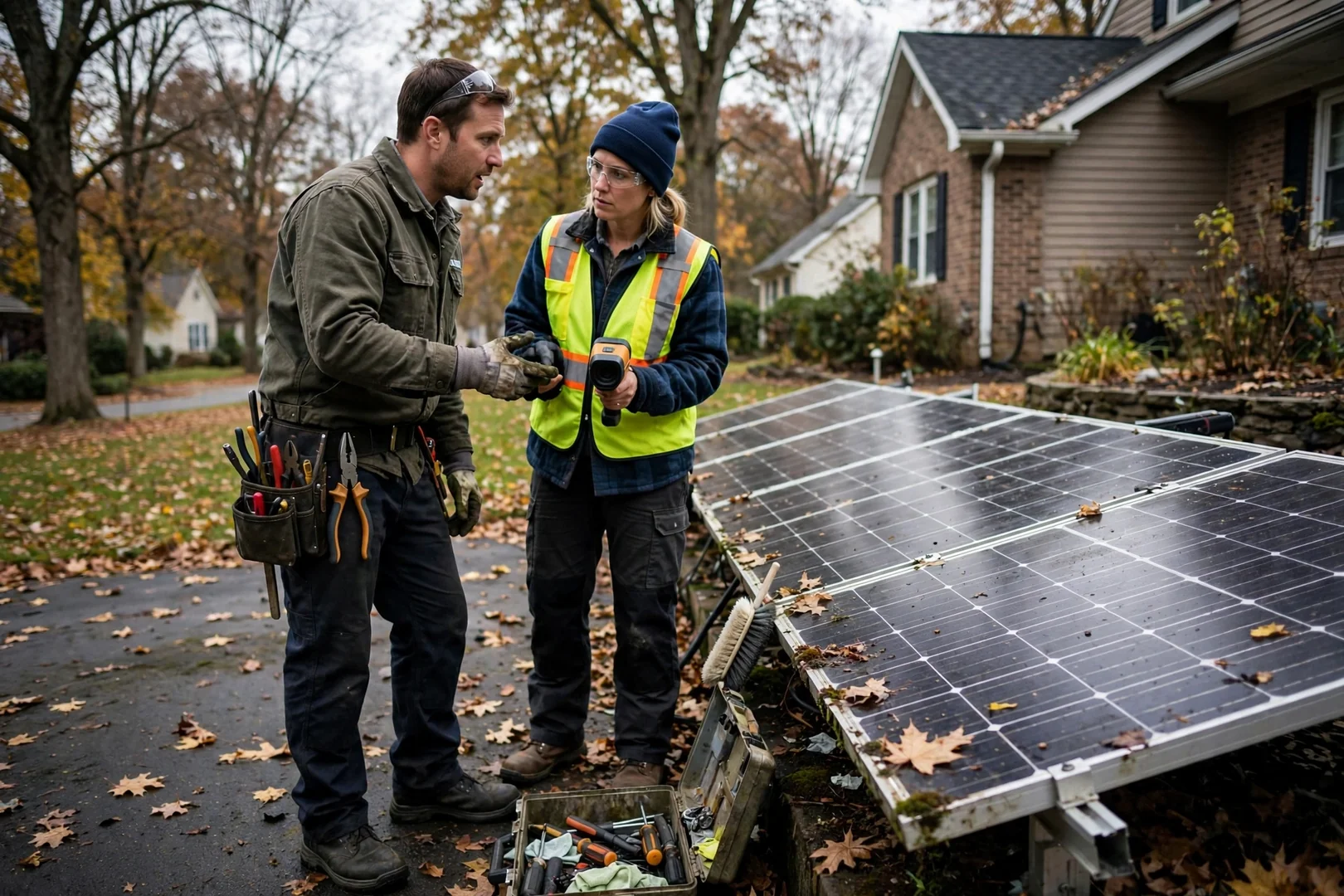
These answers address the questions Wayne property owners raise most often about off-grid solar in 2026, from battery bank sizing and generator backup to permitting, scheduling, and site preparation.
A complete off-grid system includes the PV array, an MPPT charge controller, a lithium or AGM battery bank, an off-grid or hybrid inverter, DC and AC disconnects, overcurrent protection, grounding, and system monitoring. Racking, conduit runs, combiner boxes, and labeling required by code are part of the scope as well. We provide a written equipment list before work starts and complete a post-job walkthrough covering inverter settings, state-of-charge readings, and shutdown sequence.
Preparation involves clearing access to the array location, the equipment wall, and the planned battery enclosure area, plus confirming that the room chosen for storage stays ventilated and within the battery manufacturer’s temperature range. Trimming overhanging limbs helps, since mature oak and maple canopies on many Wayne lots create partial shading that reduces array output. Our technicians handle trenching layout, conduit routing, and mounting hardware, so no electrical work is expected from the homeowner.
Off-grid systems generally cost more per kilowatt than grid-tied arrays because they require a battery bank, an off-grid capable inverter, and larger overcapacity to cover low-irradiance days. The main cost drivers are usable storage capacity in kilowatt-hours, inverter continuous and surge rating, array size, mounting type, and any generator integration or automatic transfer switch. We issue free written estimates after a site assessment so each line item is documented before any commitment.
Properly sized off-grid systems continue operating through northern New Jersey winters when the battery bank includes several days of autonomy and the array is tilted to shed snow and capture low winter sun angles. Freeze-thaw cycles, ice loading, and December cloud cover all factor into how we calculate design margin during the load study. For many Wayne properties heading into 2026, we recommend generator input on the inverter as a documented backup path during extended overcast stretches.
How Much Do Off-Grid Solar Systems Cost in Wayne?
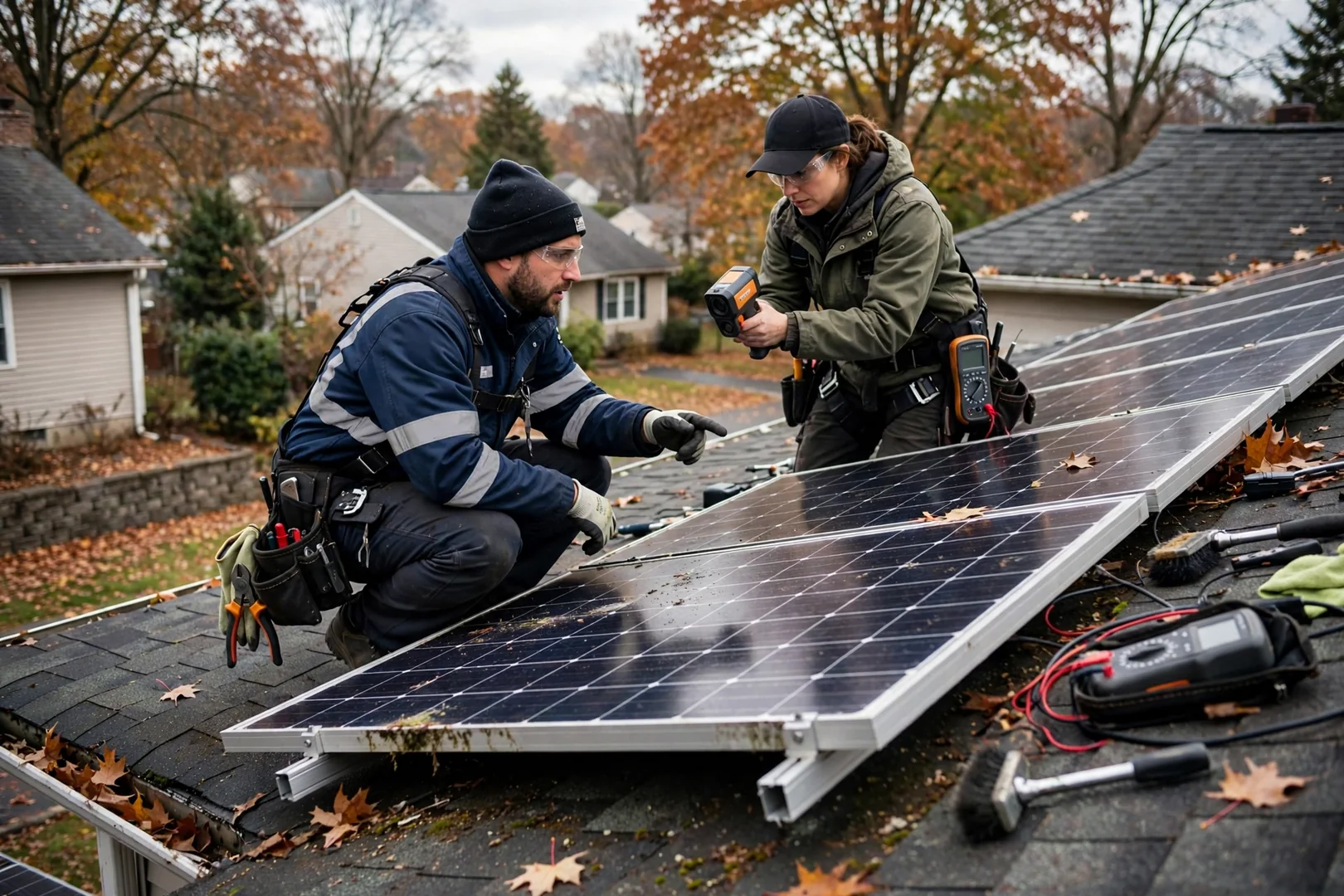
Off-grid solar pricing in Wayne depends primarily on usable battery storage capacity, inverter continuous and surge rating, array size, and mounting method, with most 2026 projects priced from a documented load study rather than a flat per-watt figure. Storage is usually the largest single variable, since a lithium iron phosphate bank with several days of autonomy carries a different cost profile than a smaller AGM configuration. Inverter selection matters next, because motor loads such as well pumps and compressors require surge headroom that entry-level units cannot supply. Array cost then shifts with mounting type, as ground-mounted racking involves footings, trenching, and conduit runs that roof-mounted arrays do not.
Additional factors include charge controller count, combiner and disconnect hardware, grounding and overcurrent protection, generator integration with an automatic transfer switch, and permitting or inspection requirements applicable to the property. Shading from mature tree canopy on many local lots can also increase array size needed to meet the same daily kilowatt-hour target. Exact figures require an on-site assessment. We measure conductor runs, evaluate the proposed battery enclosure location, and confirm structural conditions before pricing anything, then provide a free written estimate itemizing equipment, labor, and scope.
How Do We Install Off-Grid Solar Systems in Wayne?
01
Load Study and Site Assessment
Work begins with a documented load analysis that records daily kilowatt-hour consumption, surge loads from pumps and compressors, and seasonal usage patterns. Technicians measure roof pitch or ground-mount area, log shading from surrounding tree canopy, and identify a suitable battery enclosure location with adequate ventilation.
02
System Design and Written Proposal
Design pairs array capacity with battery bank autonomy, MPPT charge controller sizing, and an inverter rated for continuous and surge demand. Wiring diagrams, conductor runs, and overcurrent protection are specified on paper first, then delivered as a written estimate that itemizes equipment and labor.
03
Permitting and Equipment Staging
Plans and electrical drawings are submitted for local permit review before any hardware arrives. Once approvals are in motion, panels, racking, batteries, and inverter equipment are ordered and staged so the installation runs without interruption on site.
04
Installation and Wiring
Crews set racking and flashing or ground-mount footings, install modules, then run DC conduit to combiner boxes, disconnects, and the charge controller. Battery interconnects, grounding electrode conductors, and AC output circuits are terminated to torque specification and labeled per code.
05
Commissioning, Inspection and Walkthrough
Commissioning covers string voltage verification, insulation resistance checks, inverter programming, charge profile settings, and a full load test on the battery bank. After inspection sign-off, technicians complete a post-job walkthrough covering state-of-charge monitoring, generator input use, and the correct shutdown sequence.
Why Do Wayne Property Owners Trust Us for Off-Grid Solar Systems?
Call Us: (973) 922-9275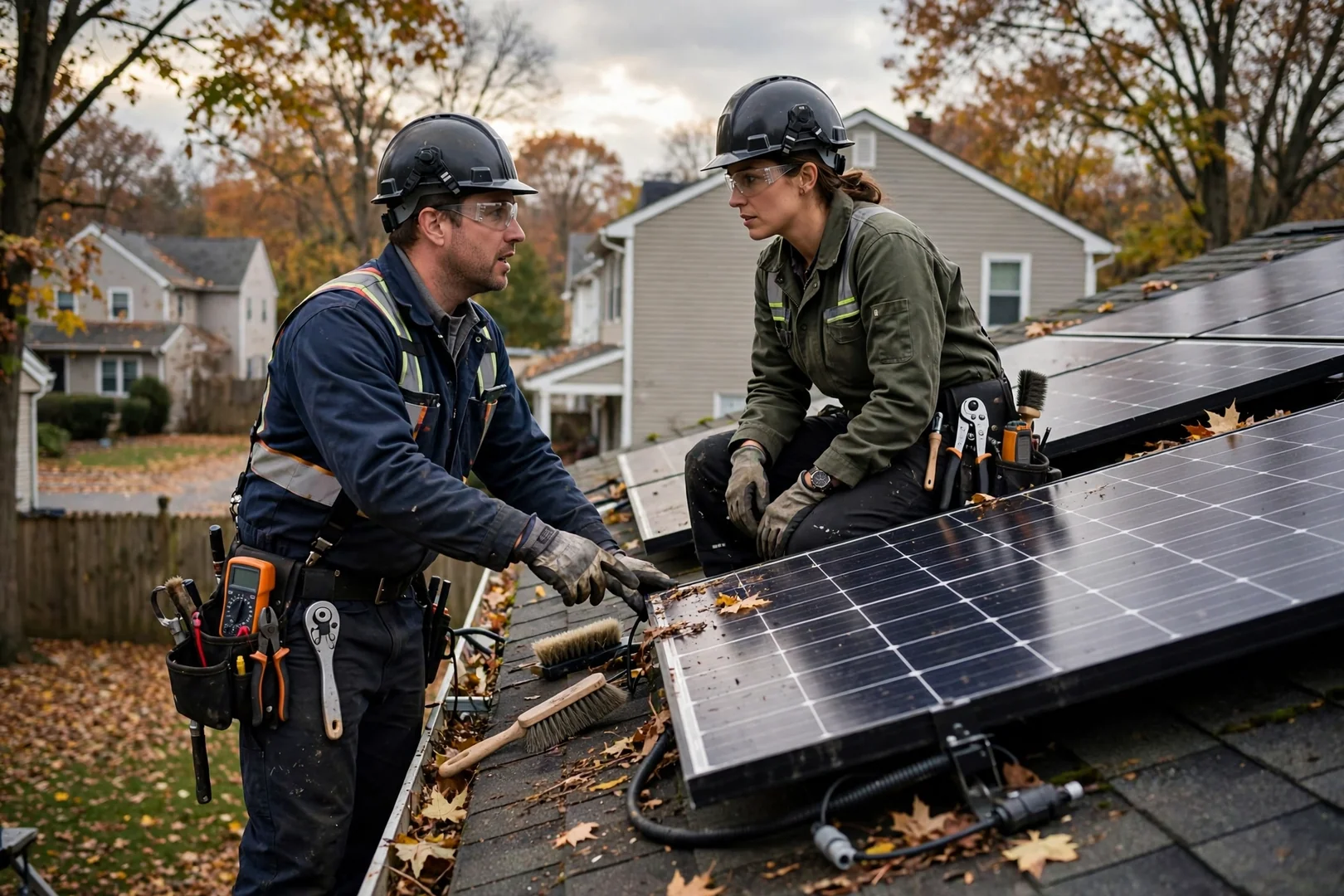
Focused Off-Grid Solar Systems Advice. We match recommendations to your actual property conditions instead of using a one-size-fits-all package.
Clear Communication. You know what is being installed, why it matters, and how to maintain it after the visit.
Local Follow-Through. Our team supports homeowners and businesses in Wayne, NJ before, during, and after the job.
Free Off-Grid Solar Estimates
Schedule Off-Grid Solar Systems in Wayne for 2026
Planning an off-grid array for a Wayne property begins with a site assessment that documents roof or ground orientation, shading from mature oaks and maples, and the battery capacity needed to carry a household through winter storm outages. Every assessment includes a free written estimate covering panel count, charge controller sizing, inverter selection, and permitting steps, with no obligation to proceed. Our technicians review load calculations with you line by line so the system matches actual usage rather than a generic template. Scheduling for 2026 installations is open now. Call or email to reserve a site visit and start your off-grid design.
Request a Free Estimate (973) 922-9275