
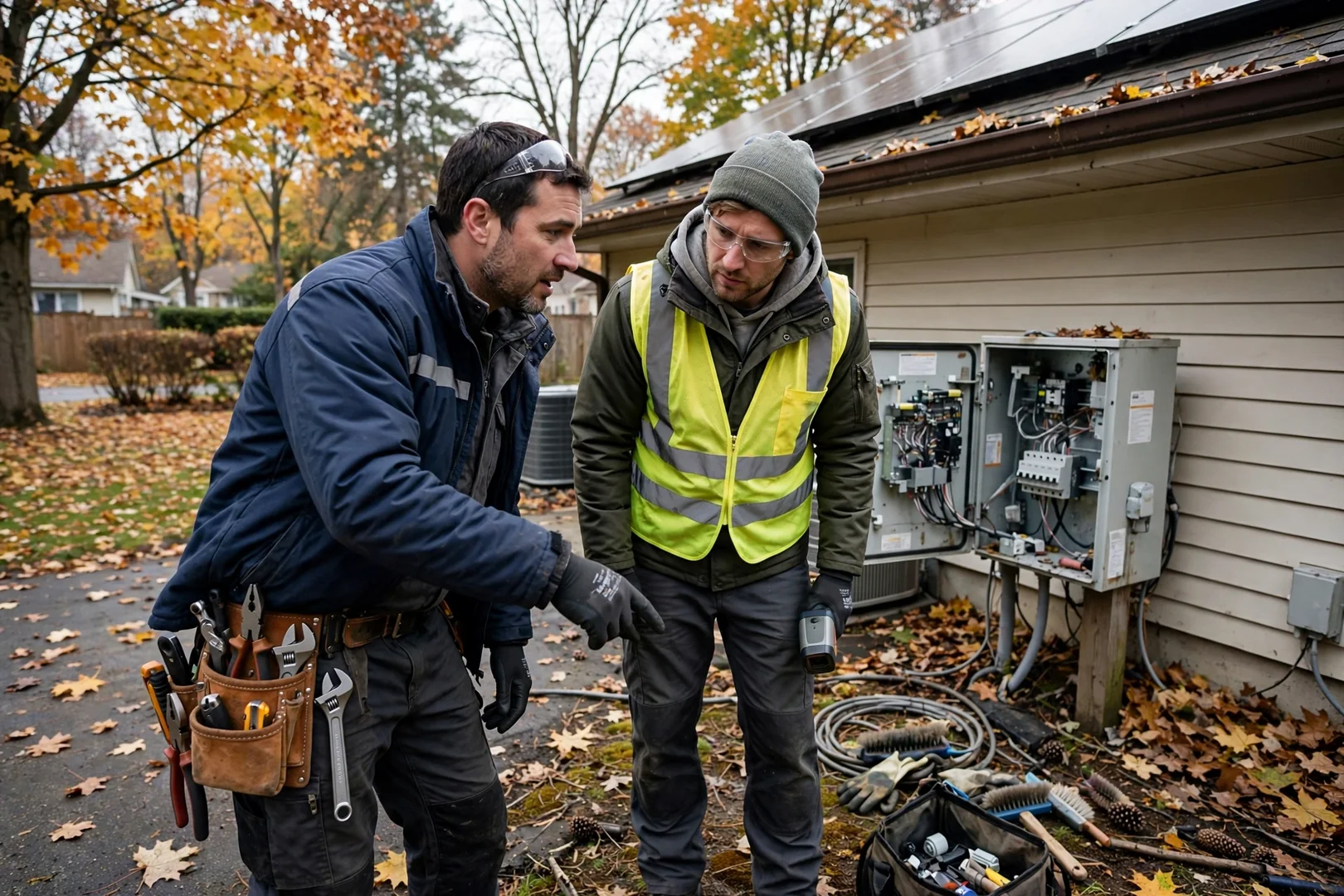
A ground-mounted installation typically moves through three distinct phases: foundation work, racking and module assembly, then trenching and electrical interconnection, each scheduled as a separate site visit. Ground screw or driven-pier foundations can be set quickly, while concrete ballast footings require a cure period before the torque tube and rails are loaded. Municipal permitting and utility interconnection review sit outside our control, so we sequence field crews around those approval dates rather than promising a fixed calendar.
Ground-Mounted Solar Installation in Wayne, NJ
Ground-mounted solar installation places an array on engineered racking anchored into the soil rather than on a roof, making it the practical option for Wayne property owners with shaded rooflines, older slate or cedar roofs, or open acreage behind the house. Many lots in the area sit near mature oak canopy and low-lying ground along the Passaic corridor, so ballasted or driven-pier foundations are selected only after soil bearing and frost-depth review. Our crews handle pier layout, tilt-angle setting for winter sun angles, trenched DC conduit runs, and inverter tie-in to the main service panel. Wayne Solar Panel Installations is scheduling site evaluations and written estimates for 2026 builds, with foundation work typically staged around spring thaw and dry summer ground. Site access is confirmed before any excavation.
Click Me to Call: (973) 922-9275Ground-Mount Site Review
Send your property details and a technician will follow up with a written estimate.
Ground-Mount Solar Service Overview
What Our Ground-Mounted Solar Installation Service Includes
Ground-mounted solar installation is the process of building a freestanding photovoltaic array on a foundation set into the ground, and at Wayne Solar Panel Installations it includes soil and shade assessment, foundation engineering, racking assembly, module mounting, trenched wiring, inverter connection, and utility interconnection paperwork across Wayne properties. Work begins with a shading study and irradiance mapping, since tall deciduous cover and rolling terrain change production sharply between spring leaf-out and late fall. Foundation type follows the ground itself: driven piles in stable soils, helical piers where fill or high water table is present, and concrete ballast where excavation is restricted. Racking is then squared and set to a fixed tilt chosen for regional latitude and snow shedding, with modules torqued to manufacturer specification and grounded per code.
Residential lots, farm and commercial parcels, and multi-unit properties each call for a different array layout, row spacing, and conductor sizing, so string design and inverter selection are decided on site rather than from a template. Trenching depth, conduit type, and combiner placement are set to keep DC runs protected from frost heave and mower traffic. For 2026 projects, we stage foundation work around thaw conditions and schedule commissioning once wiring, rapid shutdown, and monitoring are verified. Every job closes with a post-job walkthrough and a written estimate honored from the start. Clear records stay with the property owner.
Schedule an Assessment (973) 922-9275What Signs Mean Your Property Needs Ground-Mounted Solar Installation?
Signs that a property needs ground-mounted solar installation include heavy roof shading, a roof too old or too small to carry an array, structural limits in the rafters, or a roof orientation that never faces true south. Mature oak and maple canopy across many Wayne neighborhoods drops midday production well below projection, and a rooftop string cannot be moved once it is flashed in place. Aging asphalt shingles create a second problem: mounting modules over a roof with five years of life left means paying twice for removal and reinstallation. Steep pitches, dormers, chimneys, and skylights also break usable plane area into segments too small for efficient string sizing.
Other indicators show up in performance data rather than on the roof. Owners often report inverter clipping at odd hours, uneven string voltage, or winter output losses from snow that never sheds off a low-slope surface. Ground arrays resolve these conditions by placing modules at an optimal azimuth and tilt, clear of obstruction, at a height that allows snow shedding and simple access for cleaning and repair. Maintenance also gets easier. For 2026, we are reviewing more Wayne properties with open side yards and rear acreage where a ground-mounted system with helical pier footings and trenched conduit produces more usable energy than any rooftop option, and each review ends with a written estimate.
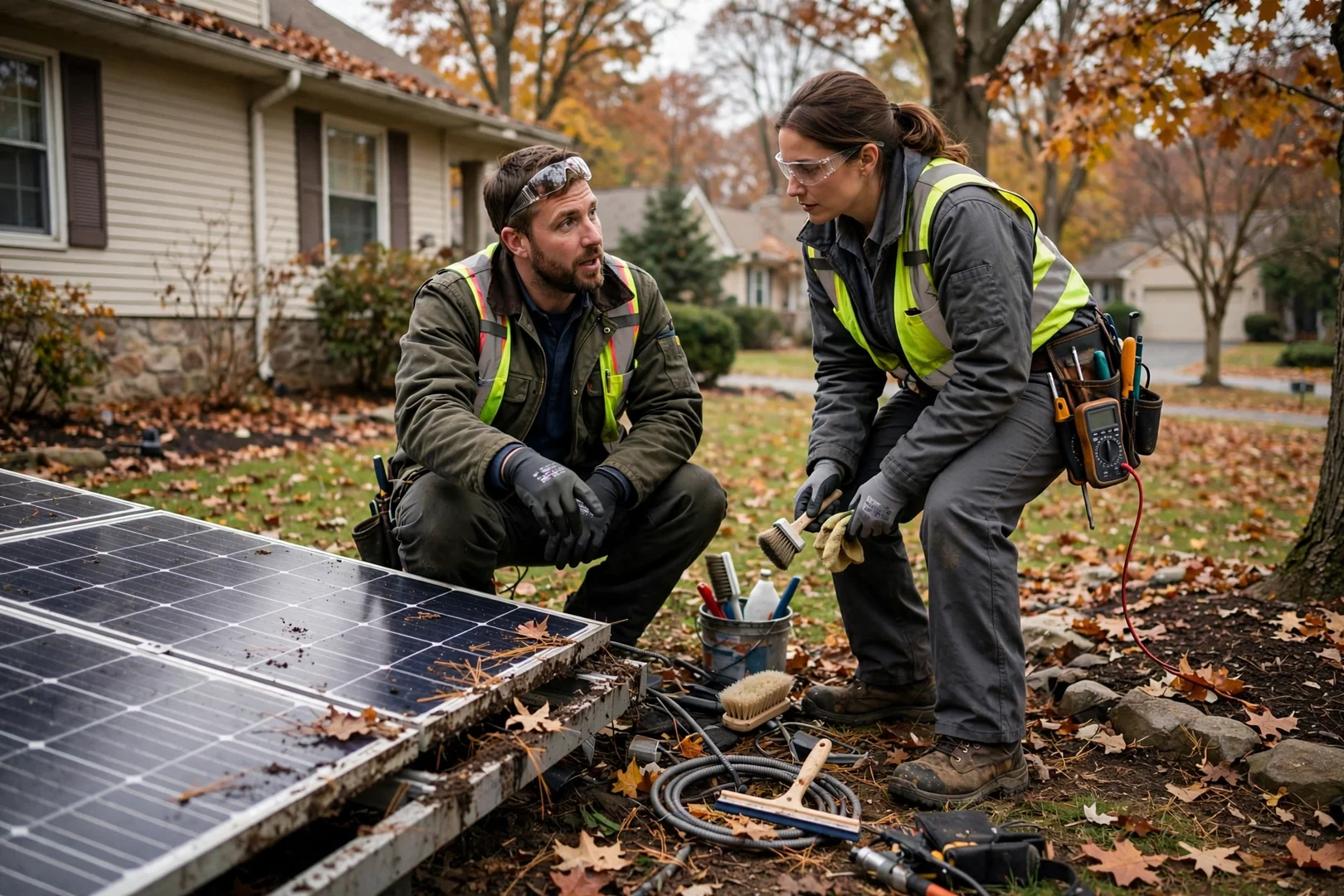
Ground-Mounted Solar Installation FAQs for Wayne Homeowners
Answers below address the questions Wayne property owners raise most often about array racking, trenching, and permitting for ground-mounted solar systems in 2026, separate from our general solar service questions.
Our scope covers geotechnical review of the mounting area, foundation installation, racking and module mounting, DC conductor trenching to the point of interconnection, inverter and disconnect mounting, grounding and bonding, and commissioning with production verification. We also handle permit drawings, load calculations, and the utility interconnection application. Every project closes with a written summary and a post-job walkthrough covering array tilt, azimuth, monitoring access, and shutdown procedures.
Property owners should clear vehicles, stored equipment, and loose landscaping materials from the array footprint and the trenching path before the crew mobilizes. We arrange utility markouts for buried gas, water, and electric lines, but private irrigation lines, septic fields, and invisible pet fencing are often undocumented, so telling us their locations early prevents rework. Tree limbs that will shade the lower module row are best addressed before racking goes up.
Ground-mounted systems carry added cost because they require engineered foundations, a standalone racking structure, and a longer conductor run from the array to the service panel. Trench length, soil conditions, frost-depth requirements, and conduit sizing for voltage drop all move the number. Wayne properties with rocky glacial till or a high water table sometimes need ballasted footings instead of driven piers, which changes both labor and material scope. We provide free written estimates after the site assessment so the foundation method and trench distance are priced accurately rather than guessed.
Local conditions influence foundation depth, array clearance, and racking specification more than any other factor in Wayne installations. Frost heave in the Passaic River basin means pier embedment must extend below the frost line, and low-lying parcels near wetlands often call for raised module clearance so heavy snowpack and seasonal standing water do not reach the lower rail. Summer vegetation growth is another consideration, and we set tilt and ground clearance during 2026 planning so mowing and snow shedding both stay practical.
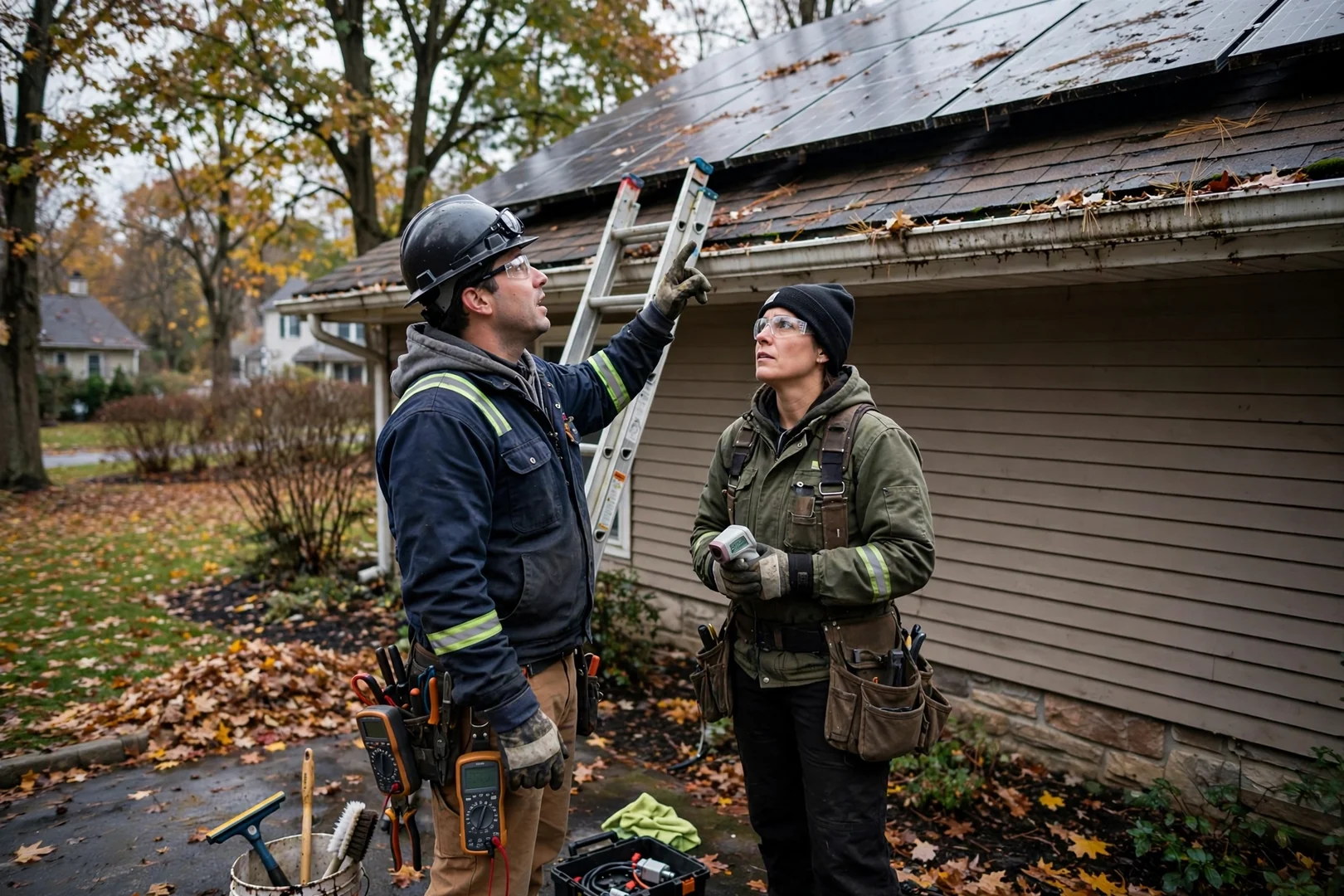
How Much Does Ground-Mounted Solar Installation Cost in Wayne?
Ground-mounted solar pricing in Wayne depends primarily on system size in kilowatts, foundation type, trench distance to the service panel, and racking structure specification, with most 2026 projects priced after soil and layout conditions are confirmed on site. Foundation method carries real weight: driven piers install faster than concrete ballast blocks or helical ground screws, and rocky glacial soil frequently pushes a project toward the more labor-intensive option. Conductor run length matters too, since a longer trench requires larger conduit and upsized wire to hold voltage drop within code limits.
Module count, inverter topology, and whether the array uses a fixed-tilt or adjustable-tilt rack also shift the total, as do racking loads engineered for regional snow and wind values. Permit fees and utility interconnection review add fixed line items that vary by jurisdiction. Site access affects labor as well, because equipment must reach the array footprint without damaging lawns or septic fields. Exact numbers require a site assessment. Written estimates are provided at no cost, itemized by foundation, racking, electrical, and commissioning scope.
How Do We Perform Ground-Mounted Solar Installation in Wayne?
01
Site Assessment and Soil Review
Our team evaluates the proposed array footprint for solar access, shading from mature tree lines, drainage, and soil composition. Pier depth and foundation method are selected from those findings, along with the trench route to the service panel.
02
Engineering, Permits, and Interconnection Filing
Stamped drawings, structural load calculations for regional snow and wind values, and single-line electrical diagrams are prepared for municipal review. We submit the utility interconnection application in parallel so approvals progress together.
03
Foundation and Racking Installation
Crews set driven piers, helical screws, or ballasted footings below frost depth, then verify plumb and alignment before loading the torque tube and rails. Tilt and azimuth are confirmed against the engineered layout prior to module mounting.
04
Module Mounting and Electrical Runs
Modules are torqued to specification, string conductors are routed through conduit, and the trench is run to the inverter and disconnect locations. Grounding, bonding, and rapid shutdown components are installed and labeled to code.
05
Commissioning, Inspection, and Walkthrough
Insulation resistance, string voltage, and polarity are tested before energizing, followed by municipal inspection and utility approval. We finish with a post-job walkthrough covering monitoring access, shutdown steps, and written documentation.
Why Do Wayne Property Owners Trust Us for Ground-Mounted Solar?
Call Us: (973) 922-9275
Focused Ground-Mounted Solar Installation Advice. We match recommendations to your actual property conditions instead of using a one-size-fits-all package.
Clear Communication. You know what is being installed, why it matters, and how to maintain it after the visit.
Local Follow-Through. Our team supports homeowners and businesses in Wayne, NJ before, during, and after the job.
Request a Ground-Mount Estimate
Schedule Ground-Mounted Solar Installation in Wayne
Planning a ground-mount array for the 2026 installation season starts with a site review of your setback distances, soil composition, and southern exposure across the property. Our technicians document array orientation, trenching routes, and racking foundation requirements, then issue a free written estimate covering equipment, labor, and interconnection paperwork with no obligation to proceed. Scheduling stays practical, since Wayne properties often need frost-depth footing work completed before the ground hardens. Call or email to reserve a survey date and review your options with a licensed installer.
Request Your Free Estimate (973) 922-9275